The Kansas Department of Wildlife and Parks (KDWP) is a cabinet-level agency with a Secretary appointed by the Governor. KDWP dates back to 1905 when fish and game laws were first organized under the Kansas Fish and Game Department and a new state law required a license to hunt. The agency has had many names over the years and has grown into a multi-faceted agency that touches the lives of every Kansan.
At KDWP, we are dedicated to the conservation and enhancement of Kansas’s natural resources for the benefit of both current and future generations. From hunters and anglers to birdwatchers and adventurers, KDWP offers sustainable outdoor recreation that fosters a deep connection between people and the natural world.
KDWP employs approximately 460 full-time employees across multiple divisions including Licensing, Fisheries, Wildlife, Public Lands, Law Enforcement, and State Parks.
Our Mission
Our mission is to conserve and enhance Kansas' wildlife and its habitats, ensuring current and future generations appreciate and enjoy these living resources and associated recreation, while informing the public of the status of Kansas' natural resources, gaining understanding and support in achieving this mission.
About the Secretary
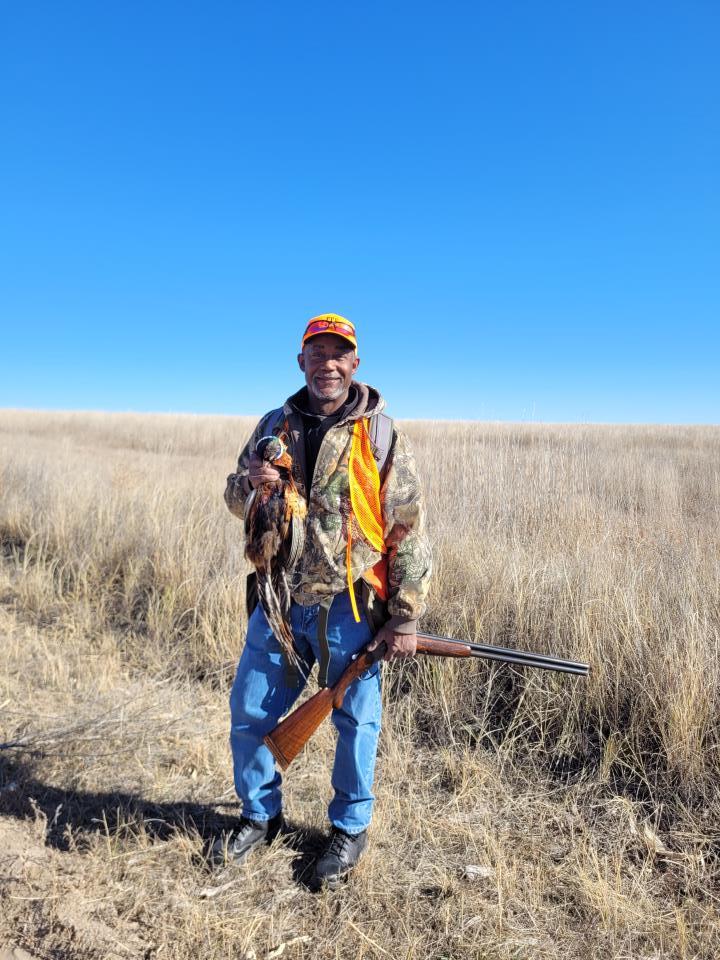 Christopher Kennedy was appointed Secretary of the Kansas Department of Wildlife and Parks by Governor Laura Kelly in March 2024 and confirmed by the Kansas Senate in March 2025.
Born in North St. Louis, Missouri, Kennedy was introduced to natural resources at a young age, having grown up shooting, hunting, boating, and fishing. He brings nearly three decades of experience in wildlife and natural resources, beginning with his first internship out of high school at the U.S. Fish and Wildlife Service to conducting water quality and quantity research projects across Arkansas, Kansas, and Louisiana. In 1996, Kennedy joined the Missouri Department of Conservation, where he remained until this appointment to to lead the Kansas Department of Wildlife and Parks. His work including assisting private landowners, managing public waters, and facilitating public education programs. He is perhaps most well-known for his work researching and restoring aquatic species such as alligator gar while advancing opportunities for Missouri’s youth to work with resource professionals to better manage public resources. Kennedy has also been a guest on the National Geographic Channel's Monster Fish and Animal Planet’s River Monsters on episodes featuring the alligator gar.
"The Kansas Department of Wildlife and Parks has a sacred charge to ensure both current and future generations can enjoy our living resources," said Secretary Kennedy. "We can sometimes get bogged down in detailed regulations—and, yes, those are critically important—but our higher purpose is to help Kansans make those outdoor memories today and leave a legacy for those that come after us."
Department Leadership
- Christopher Kennedy
Secretary
- Stuart Schrag
Deputy Secretary of Operations
- Barbara Albright
Chief Fiscal Officer
- Martin de Boer
Chief of Staff & Legislative Liaison
- Laura Rose Clawson
Chief of Public Affairs
- Diana Arensdorf
Human Resources Director
- Jason Dickson
Chief of Information Technology
- Bryan Sowards
Fisheries Division Director
- Aaron Austin
Education Section Chief
- Jake George
Wildlife Division Director
- Ryan Stucky
Public Lands Director
- Brett Blackburn
Chief Engineer
- Col. Gregory Kyser
Law Enforcement Director
- Kurtis Wiard
Chief Counsel
- Chris Berens
Ecological Services Director
Department History
- 1905 - Fish and game laws were organized under the Kansas Fish and Game Department and implementation of a state law requiring a license to hunt.
- 1911 - The State Fish and Game Department was placed under the supervision of the University of Kansas Board of Regents
- 1925 - The Fish and Game Department was reorganized as the Kansas Forestry, Fish and Game Commission with three board members appointed by the Governor.
- 1927 - Commission was reorganized and was given approval to organize a warden service. Fishing licenses required of men 18-70.
- 1939 - Commission's three-member board was abolished by the legislature and replaced by a six-member bipartisan commission appointed by the Governor
- 1943 - Legislature gives the commission full authority to set seasons and dates
- 1955 - The legislature and Gov. Fred Hall create the State Park and Resources Authority.
- 1960 - First Kansas boating laws enacted
- 1987 - Gov. Mike Hayden signs executive order merging the State Park and Resources Authority and Fish and Game Commission to create the Kansas Department of Wildlife and Parks
- 2011 - Gov. Sam Brownback signs executive order moving the Division of Tourism from the Department of Commerce to the newly renamed Kansas Department of Wildlife, Parks and Tourism
- 2021 - Gov. Laura Kelly signs executive order returning the Division of Tourism to the Department of Commerce; reinstating the name Kansas Department of Wildlife and Parks.
Kansas Department of Wildlife and Parks Timeline
The Kansas Department of Wildlife and Parks celebrated its 100th anniversary in 2005. The timeline below summarizes highlights of the department's history.
- 1905 – Fish and game laws organized under Kansas Fish and Game Department. Implementation of state law requiring license to hunt in Kansas. Twelve acres donated to the state by Pratt County Commission was deeded to the state.
- 1906 – Ring-necked pheasants stocked in Kansas
- 1911 – State Fish and Game Department placed under supervision of the University of Kansas Board of Regents
- 1923 – Bison herd started at Garden City, with assistance of American Bison Society
- 1925 – Fish and Game Department reorganized as Kansas Forestry, Fish and Game Commission, comprising three members appointed by Governor
- 1926 – First state fishing lakes built (Neosho and Meade)
- 1927 – Reorganization of Commission. Agency given approval to organize a warden service, and pay wardens up to $150 per month. Fishing licenses required of men 18 to 70.
- 1928 – Game farms established at Meade County State Park and Crawford County State Park
- 1933 – Civilian Conservation Corps begins building projects in Kansas
- 1934 – Federal Migratory Bird Hunting Stamp Act (duck stamp act) passed by Congress
- 1935 – Females from 18 to 70 first required to have a license to fish public waters
- 1937 – Federal Aid in Wildlife Restoration law (Pittman-Robertson Act) enacted
- 1938 – Publication "Outdoors with the Kansas Forestry, Fish and Game Commission" (predecessor to "Kansas Wildlife & Parks" magazine) began
- 1939 – Three-member board was abolished by the legislature and replaced by a six-member bipartisan commission of sportsmen from throughout the state, appointed by the governor. The commission was given the responsibility to appoint a director, salary not to exceed $3,300 per year. References changed from state game warden to director, and deputy game wardens to game protectors.
- 1939 – Bureaus of Fisheries and Biological Survey are combined to create the U. S. Fish and Wildlife Service
- 1939 – First land acquisition (Finney Game Refuge) using Pittman-Robertson federal aid funds
- 1942 – Acquisition of land for Cheyenne Bottoms Wildlife Area begins
- 1943 – Legislature gives full authority to Commission to set seasons and bag limits
- 1949 – First walleye stocking in Kansas waters (Clark State Fishing Lake)
- 1950 – Federal Aid in Sport Fisheries Restoration law (Dingell-Johnson Act) enacted
- 1954 – Construction begins on Marais des Cygnes Wildlife Area
- 1955 – State Legislature and Gov. Fred Hall create the State Park and Resources Authority
- 1955 – First federal wildlife refuge created at Kirwin Reservoir
- 1956 – First deer crossing sign erected, U. S. 36 in Cheyenne County
- 1958 – Kanopolis State Park authorized by Kansas Legislature
- 1958 – Cheyenne Bottoms Wildlife Area dedicated
- 1960 – Fall River State Park, Cross Timbers State Park authorized by Kansas Legislature
- 1960 – First Kansas boating laws enacted
- 1961 – Tuttle Creek State Park authorized by Kansas Legislature
- 1962 – Cedar Bluff State Park, Meade State Park, Prairie Dog State Park authorized by Kansas Legislature
- 1963 – Pomona State Park authorized by Kansas Legislature
- 1964 – Cheney State Park and Webster State Park authorized by Kansas Legislature
- 1965 – First archery and firearms deer season
- 1965 – Crawford State Park, Lovewell State Park, Milford State Park, Scott State Park, Webster State Park authorized by Kansas Legislature
- 1965 – U.S. Congress establishes Land and Water Conservation Fund
- 1966 – Wilson State Park authorized by Kansas Legislature
- 1967 – Elk City State Park, Perry State Park authorized by Kansas Legislature
- 1969 – Glen Elder State Park authorized by Kansas Legislature
- 1973 – Kansas Hunter Education Program started
- 1973 – Federal Endangered Species Act passed by Congress
- 1974 – First modern hunting seasons on antelope and turkey
- 1974 – Sandhills State Park authorized by Kansas Legislature
- 1975 – Clinton State Park, Eisenhower State Park authorized by Kansas Legislature
- 1975 – Kansas Nongame and Endangered Species Act broadens agency responsibility to all vertebrate and non-vertebrate wildlife species
- 1979 – El Dorado State Park authorized by Kansas Legislature
- 1980 – Kansas Legislature passed the Nongame Wildlife Improvement Fund creating the Chickadee Checkoff donation line on the Kansas state individual income tax form.
- 1984 – Milford Fish Hatchery completed
- 1987 – Gov. Mike Hayden signs executive order merging State Parks and Resources Authority and Kansas Fish and Game Commission to form Kansas Department of Wildlife and Parks
- 1987 – Kansas Waterfowl Habitat stamp created
- 1988 – Hillsdale State Park authorized by Kansas Legislature
- 1994 – Prairie Spirit Rail Trail authorized by Kansas Legislature
- 1994 – First "Becoming an Outdoors-Woman" workshop at Rock Springs 4-H Center
- 1995 – Trout program initiated
- 1996 – Walk-In Hunting Areas program initiated
- 1996 – Department website created
- 1999 – Department debuts online license sales system
- 2000 – Outdoor Kansas Kids program begins
- 2004 – State Park No. 24 authorized by Kansas Legislature
Annual/Quarter Reports
Agency Annual Reports


