Blue-Green Algae Information
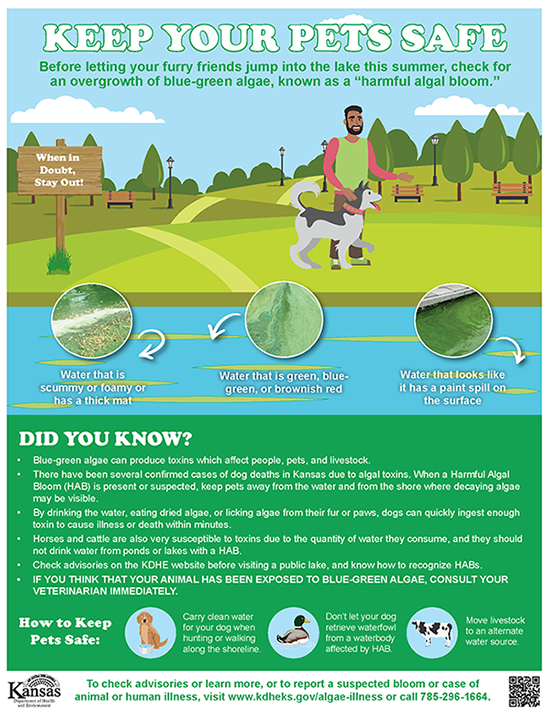
Blue-green algae look much like other, more common algae but they’re really a type of bacteria called "cyanobacteria." The Kansas Department of Health and Environment (KDHE) samples recreational bodies of water for blue-green algae when they are alerted to a potential algae bloom. Contact with high concentrations of the cyanobacteria can cause illness. KDHE issues a Public Health Watch or Public Health Warning based on either the presence of certain toxins, the number of cyanobacteria cells in the water or a combination of the two.
The Kansas Department of Wildlife & Parks (KDWP); the U.S. Army Corps of Engineers and the Bureau of Reclamation cooperate with KDHE when a Watch or Warning is issued to alert the public about potentially harmful algae blooms.
Important Information
Rabies
Rabies is a disease that can be transmitted from mammals to people and infects the brain and central nervous system. The rabies virus is normally transmitted through contact with the saliva or brain/nervous system tissue of an infected animal, and bites are the most common modes of transmission. Rabies in humans is 100 percent preventable with prompt medical care, so it is important to seek medical attention after a possible exposure. Otherwise, rabies is nearly always fatal in people once clinical signs appear.
The signs of animal rabies include changes in behavior, general sickness, problems swallowing, increased saliva, wild animals appearing abnormally tame or sick, animals that bite at everything if excited, difficulty moving, paralysis and death.
All species of mammals are susceptible to rabies infection, but the wild animals most often implicated in carrying rabies in the U.S. are skunks, raccoons, bats and foxes. Skunks and bats are the most common wildlife carriers in Kansas. Cattle, dogs, cats and ferrets can also carry rabies, so taking care to vaccinate and control pets is important.
Public health and animal health officials collaborate to educate the public and prevent the disease in people and animals. In Kansas, K.A.R. 28-1-13 and K.A.R. 28-1-14 regulate rabies control, isolation of suspect animals, and possession of certain kinds of wildlife. For the state of Kansas, the Kansas State University Rabies Laboratory conducts animal rabies testing. Confirmed cases are reported to the Kansas Department of Health and Environment (KDHE) which conducts a follow-up investigation for each case.
Additional Resources
Ten Tips for Boating Safety
The Kansas Department of Wildlife, Parks and Tourism (KDWPT), the Kansas Department of Health and Environment (KDHE) and Safe Kids Kansas encourage outdoor enthusiasts to be prepared and follow these tips for a safe and enjoyable boating experience.
- Wear a life jacket. Boating accidents can happen without warning, leaving no time to locate and put on a life jacket. Always have children wear a life jacket while on boats, around open bodies of water or when participating in water sports. Kansas law requires that all boats have one U.S. Coast Guard-approved, readily-accessible personal flotation device (PFD) for each person on board. Children age 12 or younger are required to wear a life jacket at all times when on board a boat, and KDWPT strongly recommends that adults do the same.
- Designate a “Water Watcher.”Regardless of a swimmer’s age or skill level, it’s smart for a responsible adult to keep watch when anyone is in the water. If there are several swimmers, designate a Water Watcher for a certain amount of time (such as 15-minute periods) to prevent lapses in supervision. Download a Water Watcher card here.
- Learn CPR.Learn adult, infant and child CPR. Many local hospitals, fire departments, Red Cross offices, and recreation departments offer training at little to no cost. It will give you tremendous peace of mind, not only around the water, but also in everyday life.
- Learn how to safely help someone in distress.All too often, the victim of a drowning has succumbed while trying to rescue someone else. Hurriedly jumping into the water without wearing a life jacket is a recipe for disaster. Instead, try to follow these steps in succession: a) reach out to the victim with a long pole, b) throw a rope or preferably a life ring, or c) row out to the victim. As a last resort – and after donning a life jacket – you could try to enter the water while carrying a spare life jacket or ring with you. Never jump into the water to rescue someone if you’re not wearing a life jacket yourself.
- Adhere to a “no drinking” policy while boating.Boating under the influence is just as deadly as drinking and driving. Penalties can include large fines, suspension or revocation of boat operator privileges, and jail terms. To be safe, only consume alcohol when on land, and never before operating your boat.
- Allow only those who have completed boater education to operate the vessel.In Kansas, anyone age 12-20 must have completed an approved boater education course before operating a vessel without the direct supervision of an adult. Approved adults include anyone age 18 or older who has completed the course or any adult age 21 or older. No one younger than 12 years of age may operate a vessel without supervision, regardless of a boater education certification.
- Know the rules of the water.Many people are unaware that there are operating rules for boats on the water, which include being able to recognize buoy markers and the proper use of navigation lights. Knowledge of these rules can prevent dangerous, and even deadly, situations.
- Educate yourself and your children about swimming safely.Teach children how to tread water, float and stay by the shore. Make sure kids swim only in areas designated for swimming. Swimming in open bodies of water is not the same as swimming in a pool. Be aware of uneven surfaces, underwater trees and rocks, currents (yes, there are currents in Kansas reservoirs) and changing weather.
- Keep warm.A dip in the lake may be tempting on a hot day, but remember that the water temperature may be too cold for prolonged swims – particularly in the spring and fall. Children are at a higher risk for hypothermia, so keep them out of the water or only allow short swims when the water is cold. If a swimmer seems cold or is shivering, get them out of the water immediately, and wrap them tightly in a dry blanket or towel.
- Make sure your boat has all the required equipment and is thoroughly tested before hitting the water.Safely operating a boat – like safely operating a motor vehicle – requires attention to the vessel’s worthiness to be on the water.
For more information about child safety topics, including boating and water safety, visit the Safe Kids Kansas website.
Tick Bite Prevention
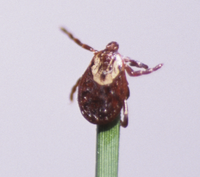 Spring and summer are hunting, fishing, camping, and hiking seasons. It is also the time of year when ticks are out. The Kansas Department of Health and Environment (KDHE) and the Kansas Department of Wildlife and Parks (KDWP) remind those spending time outdoors to take precautions to prevent tick bites.
The ticks most often encountered in Kansas are the American dog tick, lone star tick and blacklegged tick (or deer tick). Ticks can transmit diseases, including ehrlichiosis, tularemia, anaplasmosis, Lyme disease and Rocky Mountain spotted fever.
Follow these steps to prevent tick bites: Dress, DEET, Avoid and Check.
- Dress
Wear protective clothing when practical (long sleeves and pants). Clothing should be light-colored to make ticks more visible. When hiking, wear a long-sleeved shirt tucked into pants, long pants tucked into high socks and over-the-ankle shoes to keep ticks out. Products containing permethrin, which kills ticks rather than merely repelling them, can be applied to clothing and equipment but not directly to skin. Garments must be allowed to dry thoroughly before wearing. Clothing and tents pre-treated with permethrin are available, and the protection can remain active through several washings. Be sure to follow label directions.
- DEET
Insect repellents also reduce the risk of being bitten. When outdoors, use insect repellant containing 20 percent to 30 percent DEET on exposed skin and clothing for protection that lasts up to several hours. Follow the directions on the label.
- Avoid
Ticks are usually found on vegetation close to the ground. In addition to regular mowing, avoid wooded or bushy areas with tall grass and leaf litter and walk in the center of trails.
- Check
Check yourself at least every two hours for ticks when outside for extended periods of time. Pay special attention to areas in and around your hair, ears, armpits, groin, navel and backs of the knees. Promptly remove a tick if one is found. The sooner a tick is removed, the less chance it will transmit a disease to its host. If you find a tick, grasp the tick with tweezers as close to the skin as possible and slowly pull it straight out. Do not crush or puncture the tick and try to avoid touching the tick with your bare hands. Thoroughly disinfect the bite area and wash your hands immediately after removal. Be sure to also examine pets and gear, as ticks can ride into the home on animals, coats, backpacks and blankets, etc.
Symptoms of tick-borne disease can include any unusual rash and unexplained flu-like symptoms, including fever, severe headaches, body aches, and dizziness. Prompt treatment with antibiotics can prevent serious illness or even death.See your doctor immediately if you have been bitten by a tick and experience any of these symptoms.
Additional Resources
West Nile Virus
West Nile virus is most commonly spread by infected mosquitoes that have fed on infected birds. The disease was first detected in North America in 1999 and has spread across the continental U.S. and Canada. While all mosquitoes may look alike to the lay person, species of the genus Culexare the primary vectors for West Nile virus in the U.S.
Once a person is bitten by an infected mosquito, the incubation period for the virus ranges from 3 to 15 days. However, about 80 percent of persons infected by West Nile virus do not develop any symptoms. The remainder may develop a fever and other symptoms such as head and body aches, joint pains, vomiting, diarrhea or rash. Most people recover completely, although fatigue and weakness may persist for weeks or months. Less than one percent of infected patients develop a serious neurological illness such as encephalitis or meningitis. Approximately 10 percent of people with such neurological complications succumb to the infection. People who have had West Nile virus are considered immune.
The Kansas Department of Health and Environment (KDHE) began surveillance for West Nile virus in 2001, and the first human case was reported in Kansas in 2003. There were 54 cases reported in Kansas in 2014. KDHE conducts targeted mosquito surveillance in Sedgwick County and uses the information to assess the potential for West Nile virus transmission statewide.
KDHE recommends the following precautions to protect against West Nile virus:
- When outdoors, use insect repellent containing an EPA-registered active ingredient on skin and clothing, including DEET, picaridin, oil of lemon eucalyptus, or IR3535. Follow the directions on the package.
- Many mosquitoes are most active at dusk and dawn. Use insect repellent and wear long sleeves and pants at these times or consider staying indoors during these hours.
- Make sure doors and windows have tight-fitting screens. Repair or replace screens that have tears. Try to keep doors and windows shut, especially at night.
- Get rid of mosquito breeding sites by emptying standing water from flower pots, buckets and barrels. Change the water in outdoor pet dishes and replace the water in bird baths twice weekly. Drill holes in tire swings so water drains out. Keep children's wading pools empty and on their sides when they aren't being used.
Additional information about West Nile virus and preventing mosquito bites is available on the Kanas Department of Health and Environment website.


