Habitat Projects
2020
Will be long remembered for the Covid 19 virus, and the Byron Walker Wildlife Area was not immune to its effects. Covid precautions led to a cancellation of all spring burning activities. Six summer burns were completed, amounting to 360 total acres for the year. Due to a project in 2019, a limited walnut log harvest was conducted in 2020 with the income being used to update equipment on the area. Eleven marshes were dewatered and seeded to millet this summer and going into the waterfowl season those marshes are proving very attractive. Phillips 66 donated money to the Byron Walker area for wetland construction and I developed plans for 5 new marshes for consideration. Those funds were entered into a NAWCA grant to get matched money from the federal government program, and we will try to get as many of them completed as the money will fund. Waterfowl hunting has gotten so popular on the area that the constant disturbance is forcing waterfowl to use surrounding private waters more than they use our lake and marshes. Five additional marshes/wetlands are planned to be built in coming years to aid in providing more space for both waterfowl and waterfowl hunters. Modifications to regulations are also being discussed that would give migrating waterfowl more refuge in time, but those changes have not been initiated yet.
Our tree cutting contractor worked on Elm and Locust cutting in the western unit of pasture #6. This removal should greatly reduce the number of seedlings produced that would have to be dealt with in the future. I also worked on plans for another pasture unit (#8) that would put 320 acres of native prairie under grazing, to improve the plant diversity and structure, improving its productivity and usefulness for bobwhite, deer, and turkey.
2021
Project priorities were able to be shifted to a more habitat focus. We had a good summer burn season and got a lot of woody vegetation set back and forbs promoted. As always, we hope the next burn season gives up enough days to meet our goals.
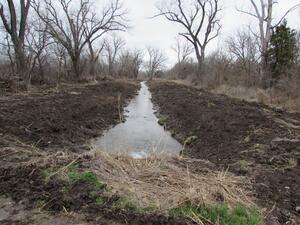
We had our heavy equipment contractor come in and clean the silt deposits out of two canals that feed the lake and marshes and raise the dike on one of those to better contain inflows. We added rip rap to 3 pond dams and one marsh dike on the area to help prevent damage from beavers and muskrats that have been a problem. The new NAWCA grant application was proposed and approved. Kingman's NRCS staff (Mike and Pam) found us a substantial amount of completed projects that we could use the value of for match for this grant and they deserve much of the credit for its size and value!
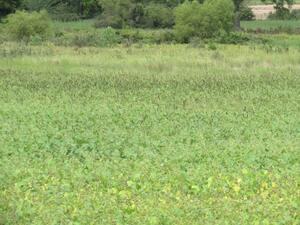
Many of our existing wetlands were planted to Japanese millet this summer and hunters should see waterfowl utilizing those resources. More recently, staff mulched, mowed, and cut the encroaching woody species in the old bison pen marshes with plans to follow up with chemical treatments to return those acres to more of a wetland/grassland community. Staff also hosted the Kansas Youth Range Camp field tour on Byron Walker, giving many of Kansas' young grassland managers an opportunity to see a patch burn/patch grazing range management program at work. Thanks go out to Keith Murrow for joining in this effort and giving wildlife management lessons in the classroom portion of the camp. Channel Catfish were again stocked in 4 of the area ponds and should provide many hours of angling pleasure to area fishermen.
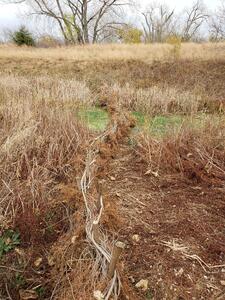
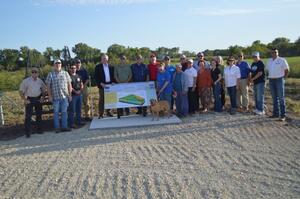
Eagle Scout candidate, Chris Wyant, brought his group of supporters to the area and built 2 beaver analogs on one of the major springs on the area. This should create more and improve wetland habitat, and also provide more huntable water for BWWA waterfowlers. A wetland ecosystem diorama memorial was dedicated in September remembering Delmer Schrag (long time Byron Walker Wildlife Area employee) and Lee Queal (long time KDWPT and DU employee). These gentlemen both dedicated much of their life to improving the wildlife habitats in Kansas and on Byron Walker Wildlife Area.
2022
This spring started dry and windy, so much so that we accomplished no burns in either the spring or summer burn seasons. We did complete the purchase of 493 acres of land to add to Byron Walker Wildlife Area, a process that took just over 6 years to complete. We developed plans for 5 marshes to build in the new NAWCA project, but the covid era raised prices considerably so that we may only be able to build 2 with that funding. We removed trees in the footprint of the marsh that is to be built south of highway 54 with the drought helping with that. We did bring in a tree cutting contractor to help with invasive tree removal in parts of pastures 1-4 and the CRP grass on the newly purchased ground. Staff girdled trees and cut understory cedar in the Sears pasture and cleared trees for fence construction in the new pasture 8 south of the lake. We planted millet in 7 marshes and on 5 ponds preparing for the fall migration. We pushed out several large blackberry thickets and treated them, so they didn’t recur. Cattails were our target with dry marshes, and we got them sprayed in several marshes as well as the north shore of the lake. A 3 species cover crop was planted in all the food plots on BWWA for deer and turkey forage.
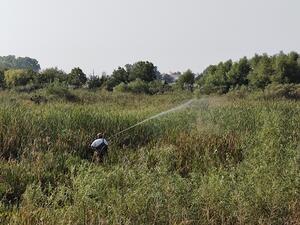
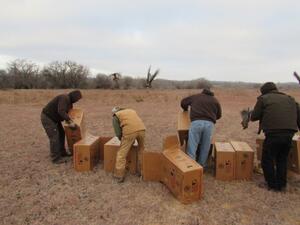
Almost 30 turkey were received from a problem flock in Wichita and stocked on the area. Our annual chemical applications were directed at Old World Bluestem, Johnsongrass, Sericea Lespedeza, and Reed Canary grass as well as applications for elm and locust as well.
2023
The turning of the calendar found us right where we ended the year before, trapped in a third year of drought. Once again, we failed to have legal burn weather and the only acres that were burned were the result of a wildfire March 20th that burned about 150 acres. We brought in a tree cutting contractor to remove the tree rows damaged by that wildfire and put him on cedars, elms, and locust in pastures 1, 2, and 5 as well as the new CRP and in the grass east of the lake. We again sprayed Old World Bluestem, Phragmites, Sericea Lespedeza, and Reed Canary with the drought allowing us to get to some places that are usually impassible. Staff spent a good deal of time removing the failing fences on the new acres and a contractor replaced those with new 5-wire barbed fencing.
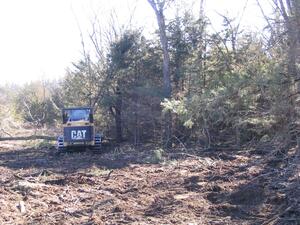
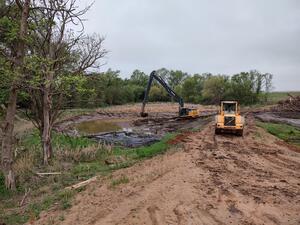
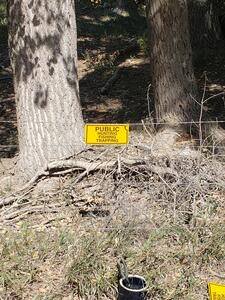
We placed public land signs along the border so hunters could find the boundaries and respect our neighbors. We adjusted our grazing rate down by approximately 25% to allow for the expected reduced growth in the drought, but mid-summer rains gave us a boost in production and left us with very good cover. Staff burned the log piles made in preparation for the new marsh south of the highway and construction started on both new wetlands in January. We also brought in a heavy equipment contractor to replace the water control structure on the CRP pond, repaired the dam, and removed several feet of the silt in that pond to give it additional storage volume. We did drain and kill out Kingman State Lake this summer, drought has slowed refilling it so restocking is expected to start in March instead of this September.
2024
With the new year finding us still in the persistent 3-year drought, we have plenty of limitations we have to consider in our management. We prepared almost 1300 acres for possible spring burns hoping the drought would subside and improved burn conditions would occur. Unfortunately, conditions have not changed in time to get all or most of those acres burned. Staff did get 3 burns accomplished that add up to 196 acres for the spring season.
A new cropping contract was bid out for the cropland acres on the 2022 acquisition. The plan is to turn the 150 acre crop field into a 4 field rotation using no-till farming methods and a mixture of crops and cover crops that will focus on benefitting pheasants. These same crops will also benefit deer, turkey, bobwhite, cottontail, and waterfowl.
Grazing and burning will also be initiated on the 2022 purchased acres, these acres will be rolled into our existing grazing management system.
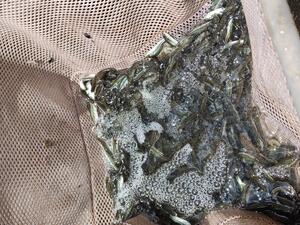
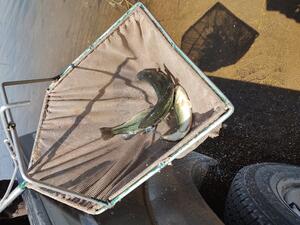
Largemouth bass stocked into Kingman State Lake
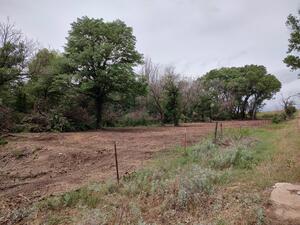
Tree cutting project in Pasture 1
Our staff assisted the fisheries division with stocking Kingman State Lake in April and May. Stocked species include largemouth bass, channel catfish, and bluegill, with varying amounts and sizes of each. Ducks Unlimited stepped up and provided funding for an extensive invasive tree control project. The sites were selected to benefit existing wetlands by removing Siberian Elm, Black and Honey Locust, and Eastern Red-cedar. Our highest costs managing habitat on Byron Walker are associated with controlling these invasive plants. Getting this large of a project completed in 1 year should reduce those costs for decades to come.


