New for 2022-2023:
- Laser lights have been added to the list of illuminating devices which may be used for the taking of furbearers treed with the aid of dogs when paired with a .22 or .17 caliber rimfire handgun or rifle.
- The general furbearer open season will be extended by approximately 15 days; the 2022-2023 general furbearer open season will conclude on February 28, 2023.
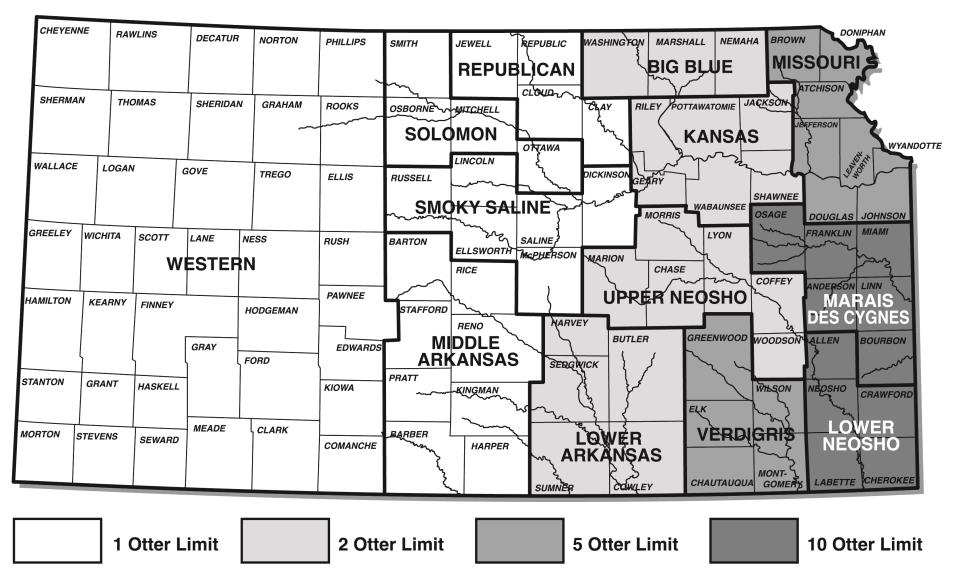
- The otter season bag limit will be increased from five to 10 otters. On the Lower Neosho and Marais des Cygnes otter management units, the unit bag limit will increase from five to 10 otters. On the Verdigris and Missouri otter management units, the unit bag limit will increase from two to five otters.
With abundant furbearer populations throughout most of Kansas, furharvesting opportunities abound. In fact, furbearers are probably one of our most under-utilized natural resources, and the benefits of their harvest are numerous. Furharvesting during the legal seasons serves as the primary means of furbearer population and damage control. Regulated harvest also provides generally rural participants with fur, meat and income in an environmentally friendly manner. Furharvesting is often considered a recreational pursuit, but as with hunting, " recreation" does not adequately describe the cultural and social importance of furharvesting in the lifestyles of many participants. Perhaps most importantly, furharvesting helps propogate an appreciation and respect for a group of species that are associated by many people only with the problems they sometimes cause.
Kansas Furbearer Guide
Best Management Practices (BMP)
As part of an effort to ensure the best traps are being used in trapping and furbearer management programs, trapping BMPs have been developed. BMPs are documents that identify techniques and traps that effectively address the welfare of trapped animals, while allowing for the efficient, selective, safe, and practical capture of furbearers. They are based on sound scientific studies of trap performance, and have been developed for each furbearer species in Kansas as a set of recommendations to be consulted by trappers and wildlife managers in the trap selection process. BMP’s are developed by the Furbearer Resources Technical Work Group of the International Association of Fish and Wildlife Agencies. For more information, visit the Furbearer Management website or contact the Emporia KDWP office.
Furbearers
Species legally taken as furbearing animals in Kansas are badger, bobcat, beaver, gray fox, red fox, swift fox, mink, muskrat, opossum, otter, raccoon, striped skunk, and weasel.
2024-2025 Muskrat Study
Hunter / Furharvester Education
Hunter Education Certification
Anyone born on or after July 1, 1957, must complete an approved hunter education course before hunting in Kansas. Anyone under 27 years old must carry their hunter education card while hunting. Students must be at least 11 years old to be certified. Youth 12-15 who have completed hunter education may hunt without adult supervision (except during youth seasons when adult supervision is required regardless of hunter education). Exceptions include youth 15 and younger who may hunt without hunter education while directly supervised by an adult 18 or older. Anyone 16 or older who has not completed hunter education may purchase up to two apprentice hunting licenses. An apprentice license is valid one year from date of purchase, and the holder must be under the direct supervision of a licensed adult 18 or older when hunting. Hunter education is not required while hunting one’s own land. Duplicate certificates are provided at no cost at KDWPT regional, district and state park offices or by calling (620) 672-0773.
Furharvester Education Certification
Persons born on or after July 1, 1966, must successfully complete a furharvester education course approved by KDWPT to purchase a furharvester license or hunt, run, or trap furbearers or trap coyotes on lands other than their own. Course information: (620) 672-5911 or KDWP website.
Hunting & Furharvester License
To view all Hunting Application and fees visit Application and Fees.
Hunting License
All resident hunters age 16 through 74 must have a resident hunting license unless exempt. Nonresident hunters, regardless of age, must have a nonresident license. Annual hunting licenses expire one year from the date of purchase. Resident hunters age 65-74 qualify for senior annual hunting licenses ($15), or annual hunt/fish combination licenses ($25). Residents age 16-20 qualify for Youth Multi-year hunting ($42.50) or hunt/fish combination licenses ($72.50), which expire the end of the year they turn 21.
A resident is defined as a person who has maintained that person’s place of permanent abode in the state for 60 days prior to purchase. Domiciliary intent is required, evidence of which may include where a person votes, pays personal income taxes, or obtains a driver's license. Residency of at least one year is required to purchase lifetime licenses. Lifetime license holders are considered Kansas residents for hunting permits and tags, even if they no longer live in Kansas. Hunters may purchase a special license that is valid only on controlled shooting areas. Nonresidents who are full-time secondary, post-secondary or vocational students at Kansas schools and are living in Kansas may obtain resident hunting licenses and permits but must carry evidence of Kansas student status. They may not purchase lifetime licenses.
Furharvesting License
A furharvester license is required to hunt, trap, or pursue (run) furbearing animals, or to sell their pelts. A furharvester license is required to trap coyotes, and a hunting license is required to hunt them. The same license required to take coyotes is required to sell their pelts. Unlicensed, non-participating observers may accompany a licensed furharvester but may not carry or use equipment, control dogs, or otherwise assist with furharvesting activities.
Residents 15 and younger may purchase a junior furharvester license at a reduced price. Youth 13 and younger accompanied by a licensed furharvester are exempt.
Furbearers Regulations
The information in this website is a service to hunters. It has been prepared as a guide only. This is not a complete list of regulations. For more detailed legal information, contact the department's Law Enforcement Division. Complete regulations may also be viewed and printed online.
Furbearer Defined
Species legally taken as furbearers in Kansas are badger, bobcat, beaver, gray fox, red fox, swift fox, mink, muskrat, opossum, raccoon, striped skunk, and weasel.
Legal Equipment
Furbearer and Coyote Hunting
- Firearms (except fully automatic) and archery equipment.
- Furbearer and Coyote Trapping – smooth-jawed foothold traps (except that all types of foot-hold traps may be used in water sets), body-gripping traps, box traps, cage traps, snares, colony traps, and deadfalls.
Artificial Light
Furbearers and coyotes may be taken at night, but use of artificial light, including optics that project or amplify light, is prohibited. However, hand-held, battery-powered flashlights, hat lamps, or hand-held lanterns may be used with .17 and .22 rimfire rifles and handguns to take trapped furbearers, trapped coyotes, or furbearers treed by dogs.
Special Equipment
Calls, lures, baits, and decoys may be used to take furbearers and coyotes.
Trap Size Restrictions
The following may only be used in water sets: body-gripping traps with inside jawspreads 8 inches or greater; and foothold traps with outside jaw-spreads greater than 7 inches. Measurements should be taken across the jaws of both trap types at a 90-degree angle. “Water set” means any trapping device in which the gripping portion is placed at least half-submerged in flowing or impounded waters and remains in contact with the water.
Snares
Snares are prohibited in dryland sets within 50 feet of the outside edge of a public road or within five feet of a fence bordering a public road. Landowners and tenants or their family members or agents may use snares in rights-of-way adjacent to their lands
Disposing of Furbearers
A fur dealer's license is required to buy raw pelts of furbearers or coyotes, and furharvesters may sell raw pelts only to licensed fur dealers. A furharvester’s license is required to sell furbearers, even if taken on one’s own land.
Skinned carcasses and meat of furbearers may be sold or given to non-fur dealers, and raw furs, pelts, or skins of furbearers may be given to non-fur dealers if a written notice including the seller’s or donor’s name, address, and furharvester license number accompanies the carcass, pelt, or meat. A bobcat or swift fox tag shall meet this requirement.
Live, wild caught furbearers and coyotes may not be sold or purchased in Kansas. Restrictions above apply to internet sales.
Trap Tagging and Tending
All traps, including snares and deadfalls, must be tagged with the user's name and address or department-issued KDWPT number. They must be tended and inspected at least once every day.
Pelt Tagging
Bobcat, Otter & Swift Fox Tagging
Bobcats, otters and swift foxes must be presented to KDWPT staff for tagging within seven days of seasons’ end. It is recommended tags be kept with mounted specimens.
Furbearer Field Trials
Coyote, gray fox, opossum, raccoon, and red fox (wild or pen raised) may be used for field trials by permit from KDWP.
Coyotes Hunting & Trapping
Season Dates (statewide): All year
Possession Limit: No limit.
No closed season for trapping or hunting coyotes. Motor vehicles and radios in vehicles may be used to hunt coyotes only. Furharvester license required to trap and sell; hunting license required to hunt.
Otter Bag Limits and Management Units
Trappers may take up to 10 (10) otters in any combination of units as long as they do not exceed the unit bag limit for any unit.
Furharvester License
A furharvester license is required to hunt, trap, or pursue (run) furbearing animals, or to sell their pelts. A furharvester license is required to trap coyotes, and a hunting license is required to hunt them. The same license required to take coyotes is required to sell their pelts. Unlicensed, non-participating observers may accompany a licensed furharvester but may not carry or use equipment, control dogs, or otherwise assist with furharvesting activities. Residents 15 and younger may purchase a junior furharvester license at a reduced price. Youth 13 and younger accompanied by a licensed furharvester are exempt.
Furharvester License Exemptions
The following persons are not required to have a furharvester license:
- owners of land or tenants of land leased or rented for agricultural purposes, and immediate family members living with them, while furharvesting on this land;
- residents 13 and younger accompanied by a licensed furharvester;
- legally-defined Native American Kansas residents (must apply for free license);
- nonresidents using field trial permits issued by KDWPT. This applies to furharvesting only; a furharvester license is required of these exempt individuals when selling furbearers or their pelts.
Research Reports


